
 日本語
日本語 ENGLISH
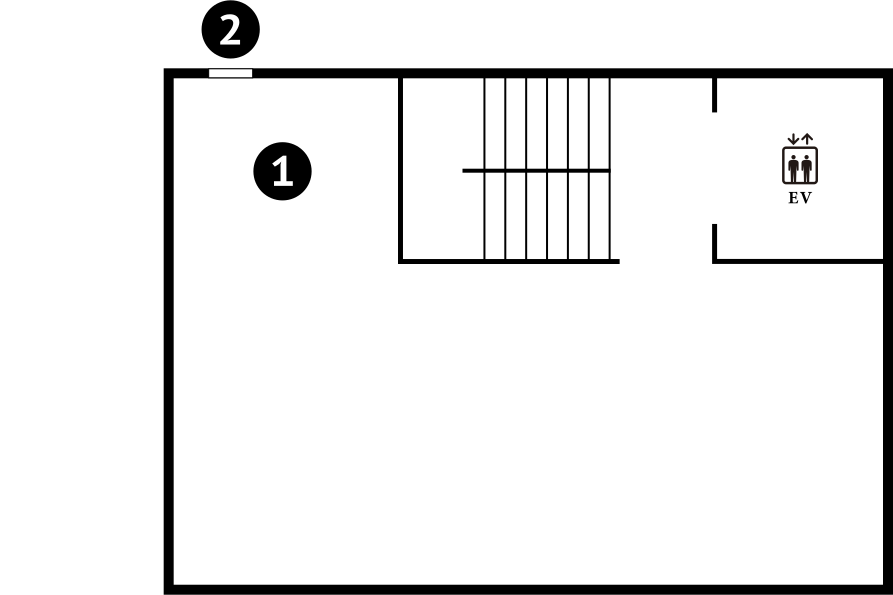
Floor Guide
1FExplanation Video
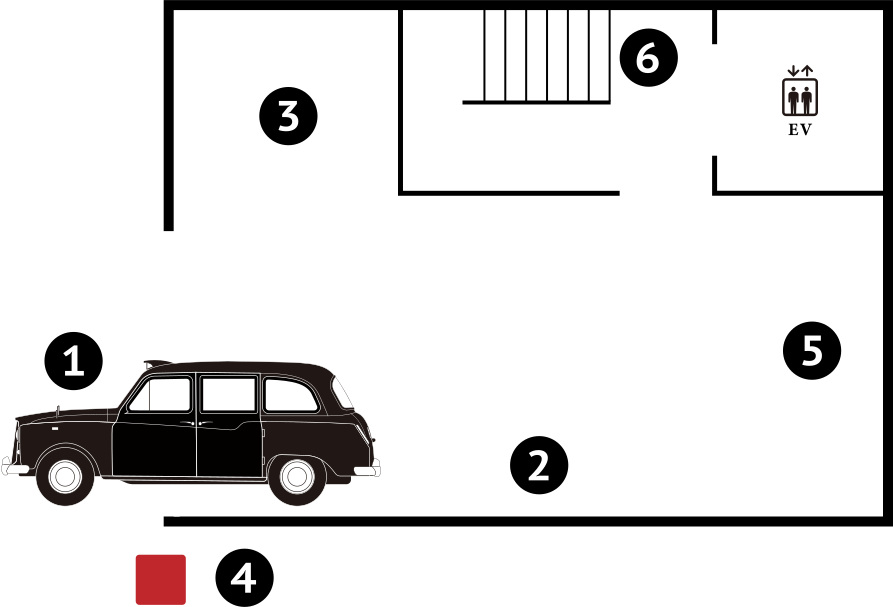
- London Taxi / Black Cab
- Official Sherlock Holmes Goods
- London Souvenirs / Gifts
- Telephone Box
- Reception / Ticket Counter
- Stairs
2FExplanation Video
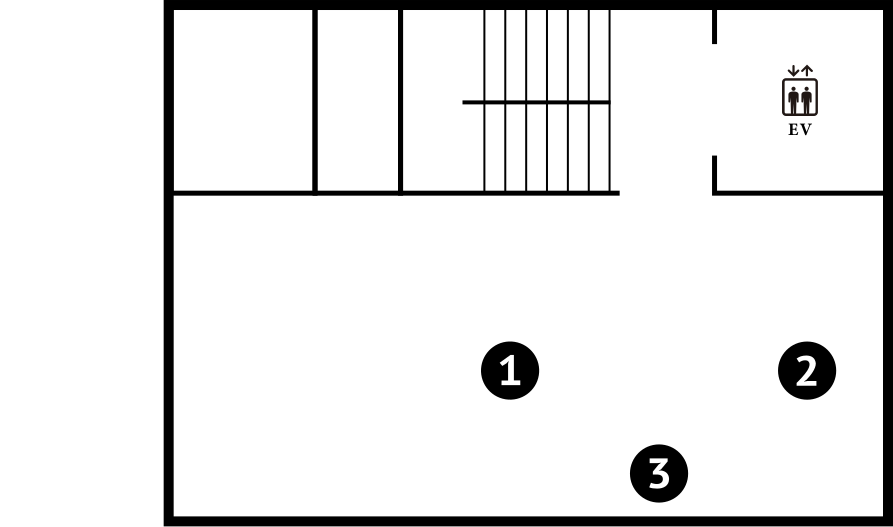
- Evolution of Silverware
- Gentlemen’s Items
- Harp
3FExplanation Video
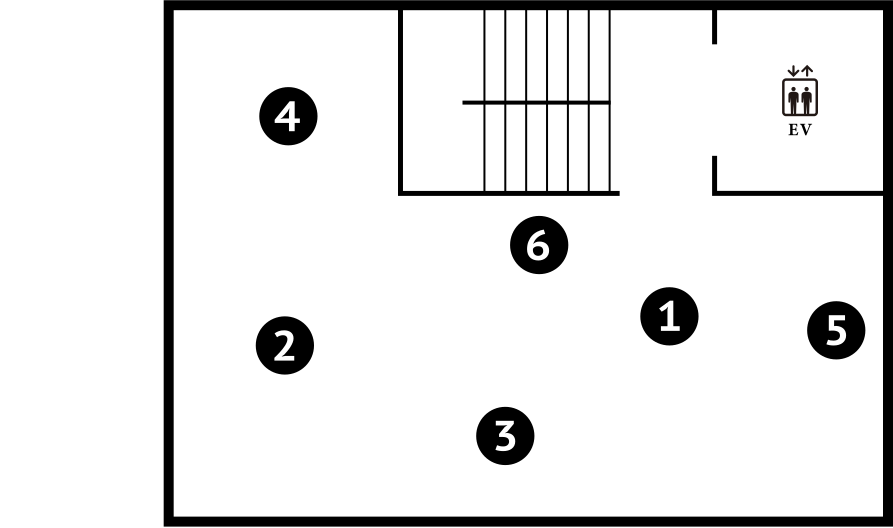
- Entrance
- Living Room
- Bedroom
- Study
- Stairs
- First Edition Corner
4FExplanation Video
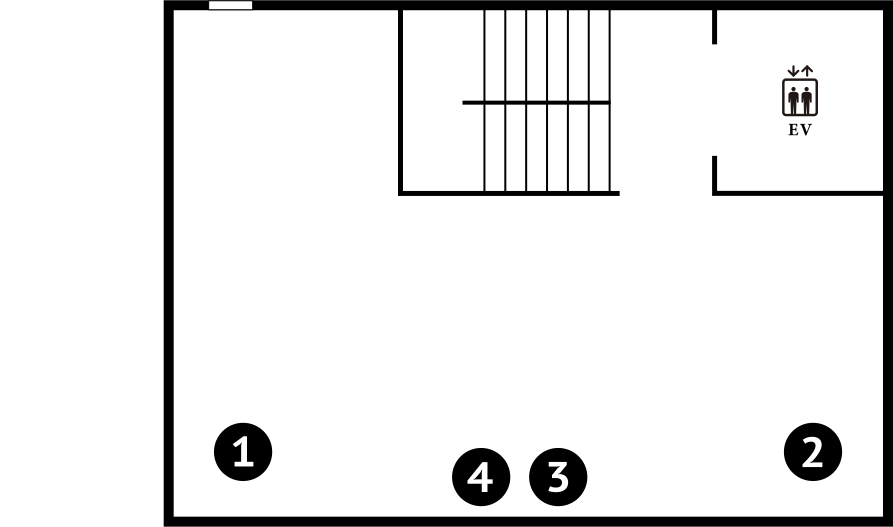
- Royal Warrant Piano
- Gramophone
- Fireplace
- Queen Victoria
- Standing-style Tea Room
- Window Designed as a Hanging Scroll
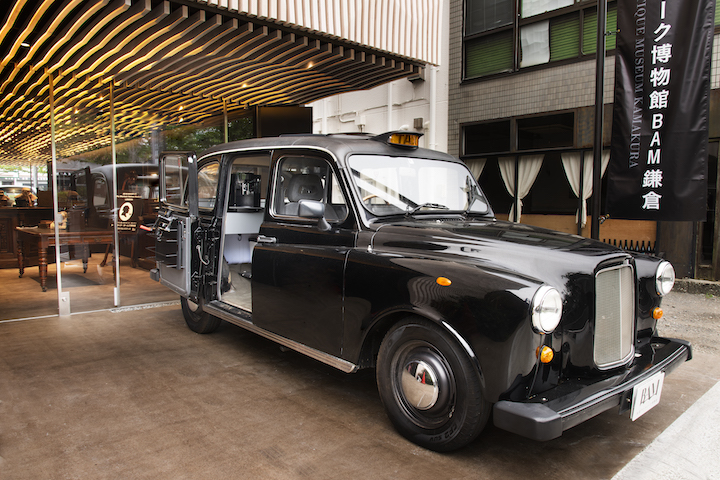
A vintage London taxi greets you at the BAM entrance. Commonly known as a “Black Cab,” it is part of the director’s personal collection. He owns models from various eras, and with a total of 10 vehicles, he is the largest Black Cab collector in Japan.
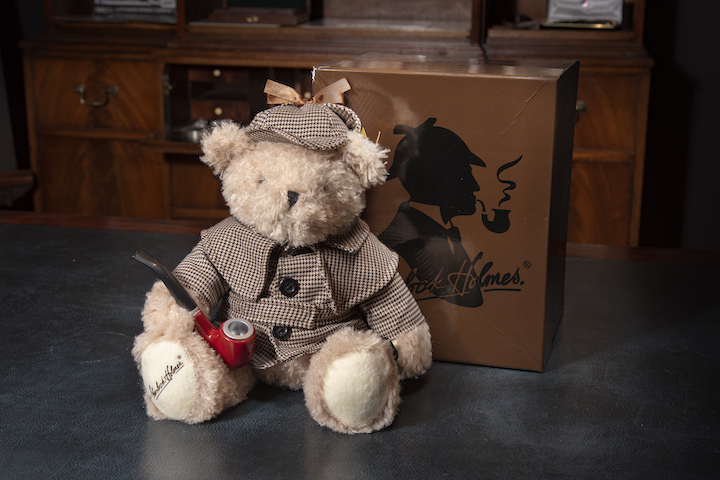
Get official merchandise from the Sherlock Holmes Museum in London—right here in Kamakura!
The directly imported goods are exactly the same as those sold in London, offering a small taste of a British getaway. Original deerstalker hats, Inverness cloaks, and teddy bears dressed with pipes and magnifying glasses are must-haves for Holmes fans.
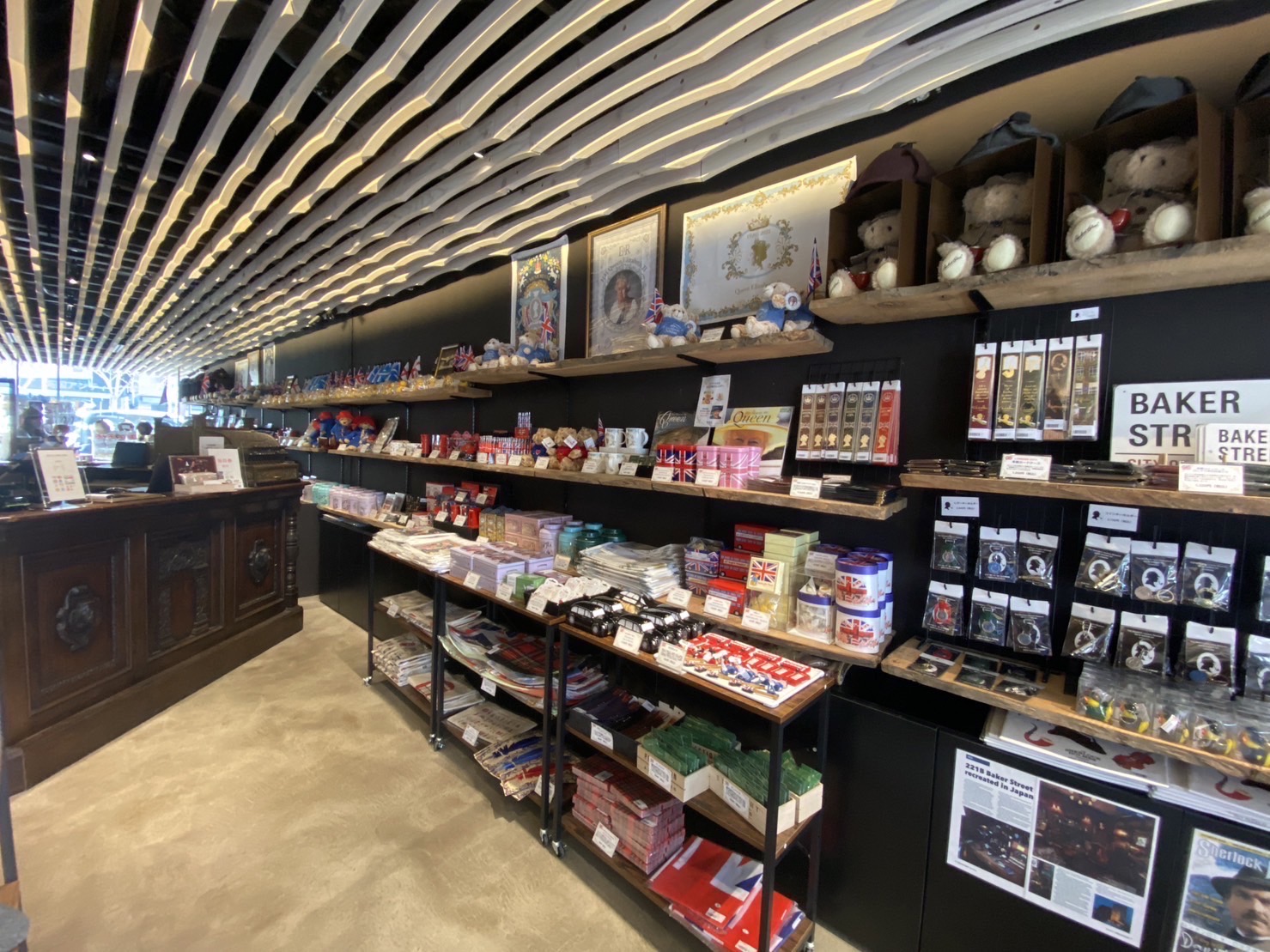
The Museum Shop offers a wide selection of British-imported items!
You’ll find classic London-themed souvenirs such as Big Ben, red telephone boxes, and double-decker buses, along with rare original goods imported directly from UK museums. Original tea cups inspired by Kengo Kuma’s BAM sketches are also available.
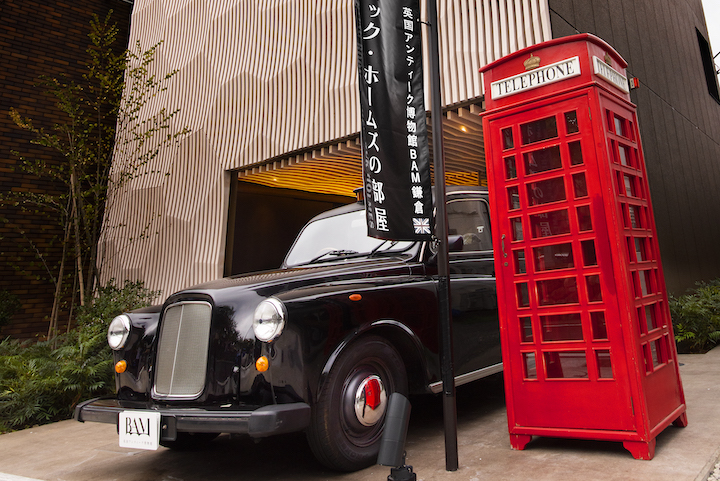
A bright red telephone box—an iconic symbol of London—has arrived straight from the UK! Standing next to the black London taxi, the contrasting colors create a striking visual combination.
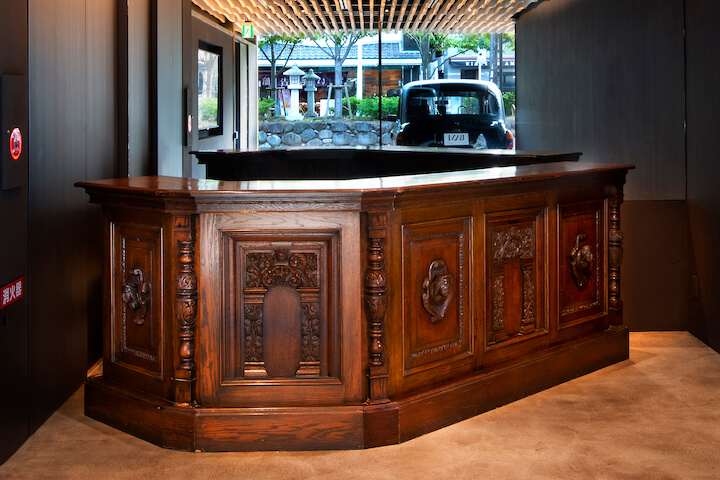
At the Grand Floor entrance stands not just any ticket counter, but an authentic antique bar counter once used in a British pub. Made of solid oak with impressive carvings at the base, it gives a warm, historic atmosphere. If you purchase an online ticket, your entry will be smooth at this counter.
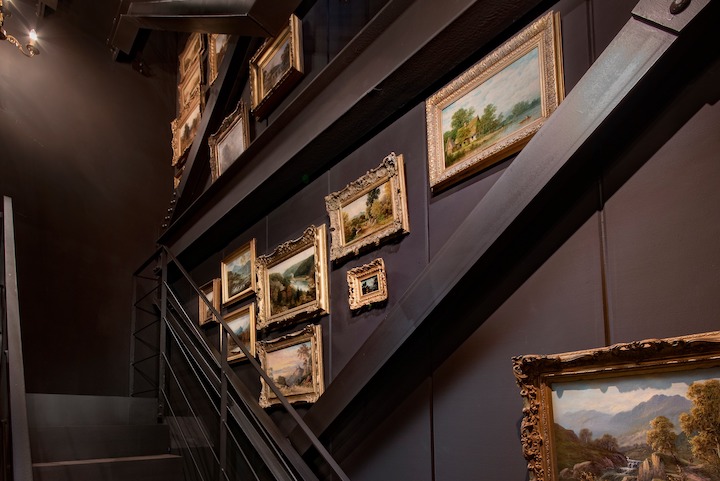
As you ascend the stairs from the Grand Floor, the wall is lined with British landscape paintings that completely cover the exposed structural wall. These unsigned works from over 100 years ago depict regional landscapes of England, Scotland, and Wales, each framed in period-appropriate frames. As you climb the stairs, enjoy discovering your favorite scene—nostalgic for those who have visited the British countryside, and a wonderful preview for those who will visit in the future.
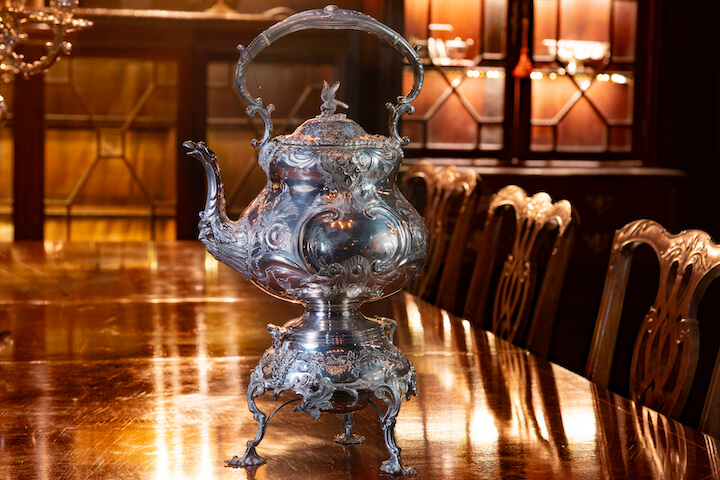
The second floor is adorned with silver pieces spanning the Georgian, Victorian, and Edwardian eras. The wall-to-wall cabinets display teapots, biscuit warmers, kettles, and other elegant items that reflect the refined lifestyles of the time, illuminated beautifully by candlelight.
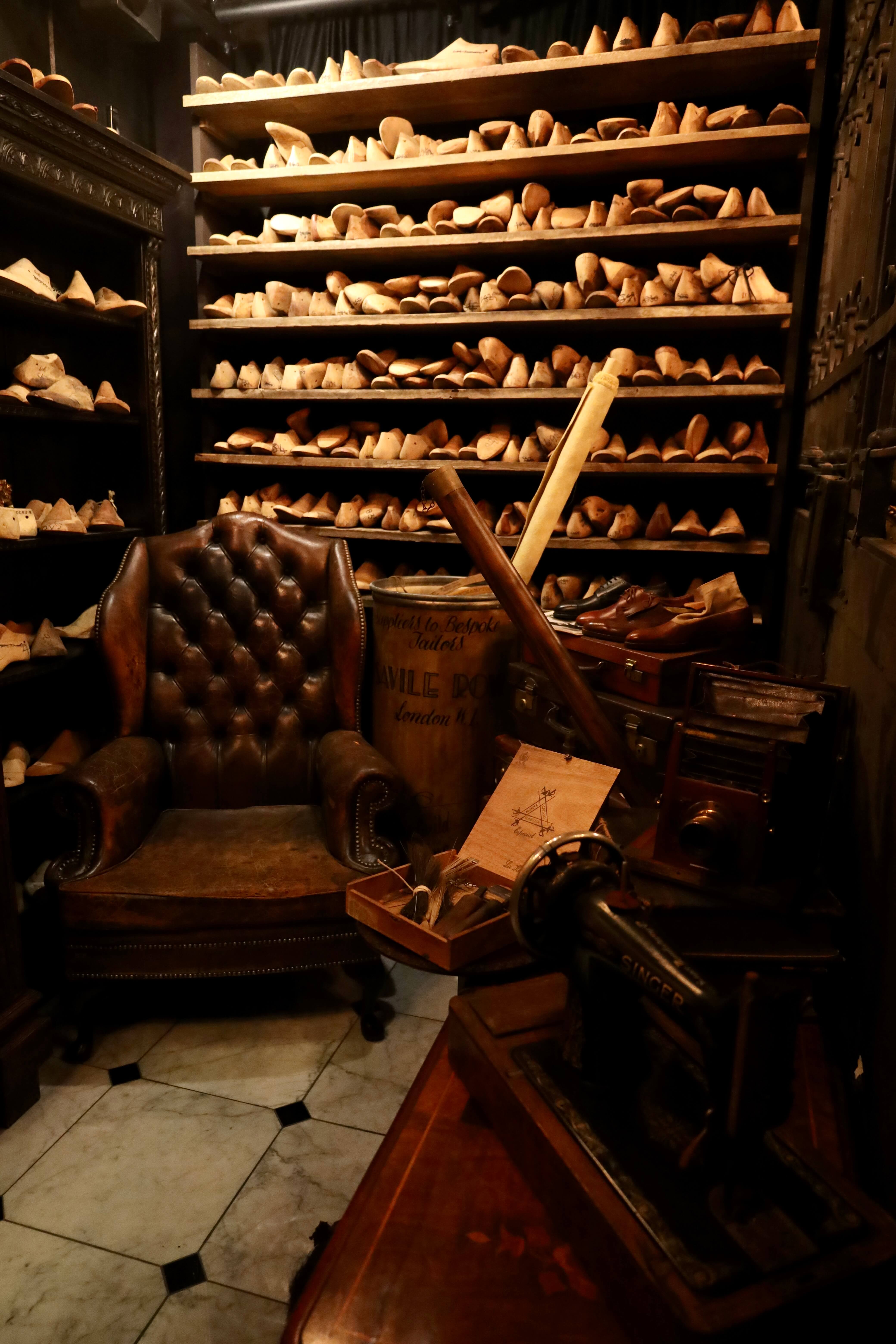
Inside a small room hidden behind the heavy iron door to the left of the second-floor entrance, items for gentlemen are displayed. Antique leather trunks, the red coat and bearskin hat of the Queen’s Guard, wooden lasts from the royal shoemaker John Lobb, and top hats can all be viewed here.
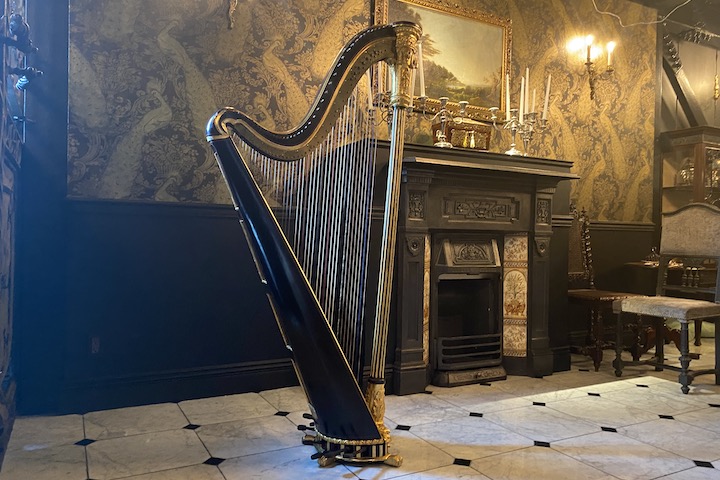
A black and gold British harp made during the Georgian period about 200 years ago. Lions are carved at its base. It is believed to be a rare piece potentially crafted in the workshop of Sébastien Érard, who fled France during the Revolution and continued his work in Britain.
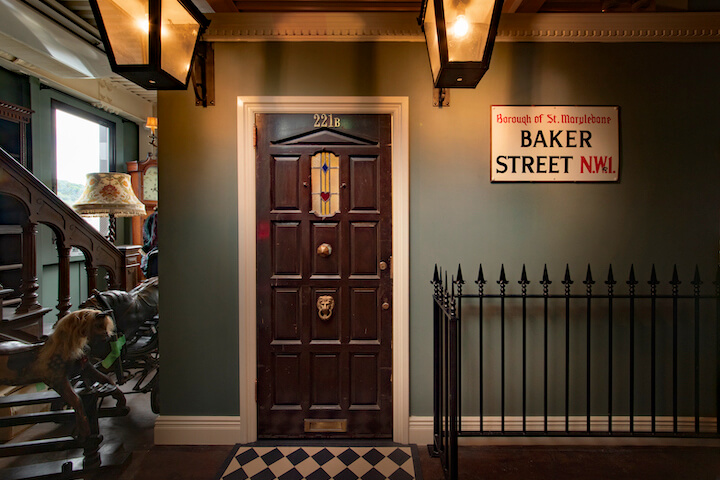
The entire 3rd floor recreates Sherlock Holmes’s room. Upon entering, you’ll see a Victorian-era door marked “221B” with a door knocker, along with an authentic Baker Street road sign used during the period.
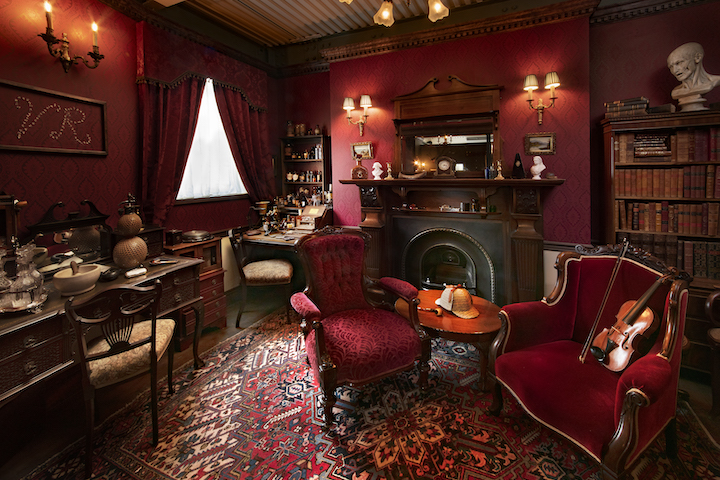
A wine-red wall and a Victorian fireplace set the scene for Holmes’s world. In front stands an armchair used to welcome clients. Items such as the iconic gázogene (soda-water maker), antique microscopes, and Victorian scientific instruments are faithfully arranged just as they would have appeared in the stories.
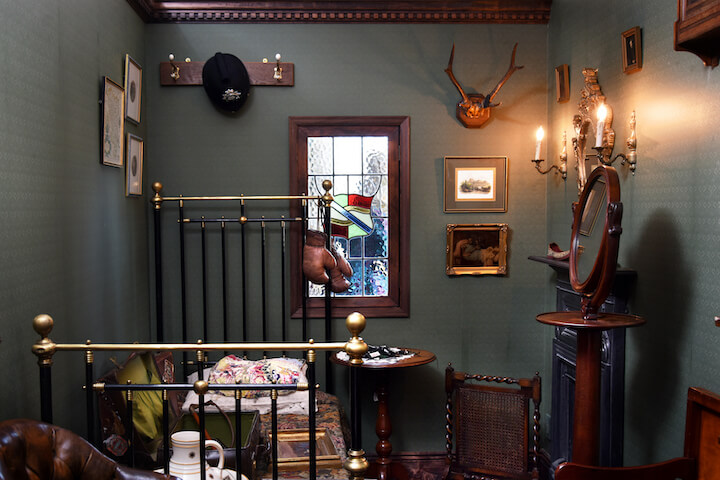
A small room arranged to resemble Holmes’s bedroom features a compact Victorian iron bed and even a 100-year-old wooden commode chair.
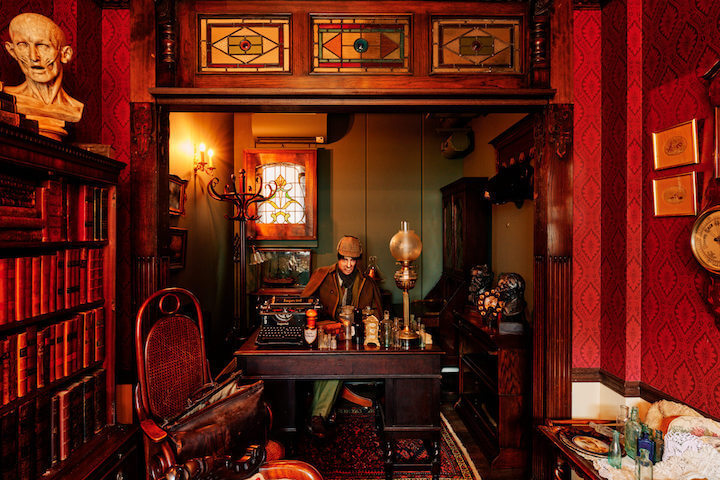
In Holmes’s study, located beyond the living room, sits a leather desk with a 100-year-old oil lamp. The scene depicts Holmes sitting in an antique chair, examining something intently through a magnifying glass.
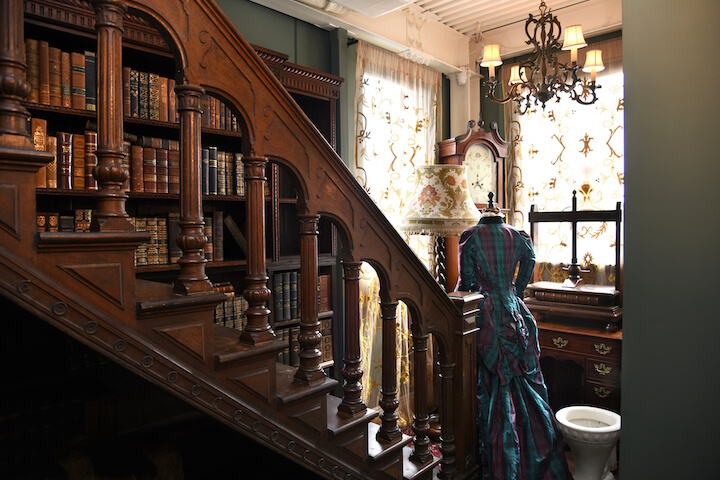
Beneath the antique staircase, an antique wooden rocking horse with real horsehair is quietly displayed. Behind it stands a woman dressed in an authentic Victorian gown reminiscent of a character from the Holmes stories, gazing out the window.
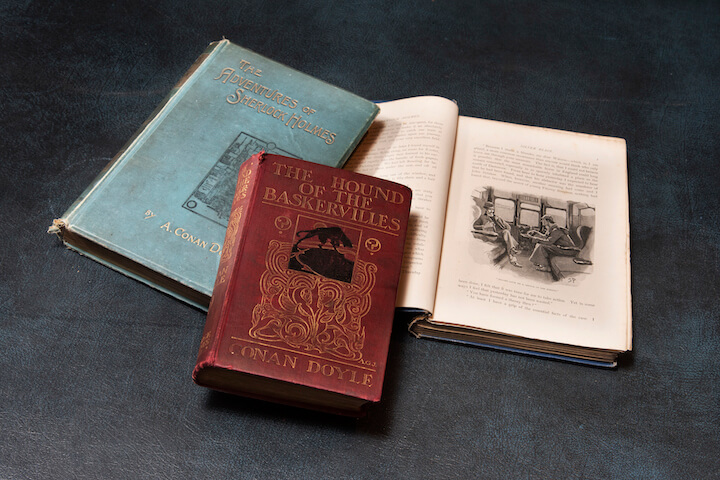
The Sherlock Holmes canon consists of 56 short stories and 4 novels, published between 1887 and 1927. While Holmes was not initially popular, serialization in The Strand Magazine led to widespread acclaim and later book publications. BAM Kamakura displays first editions of works such as “The Adventures of Sherlock Holmes,” “The Return of Sherlock Holmes,” and the novels “The Hound of the Baskervilles” and “The Valley of Fear.”
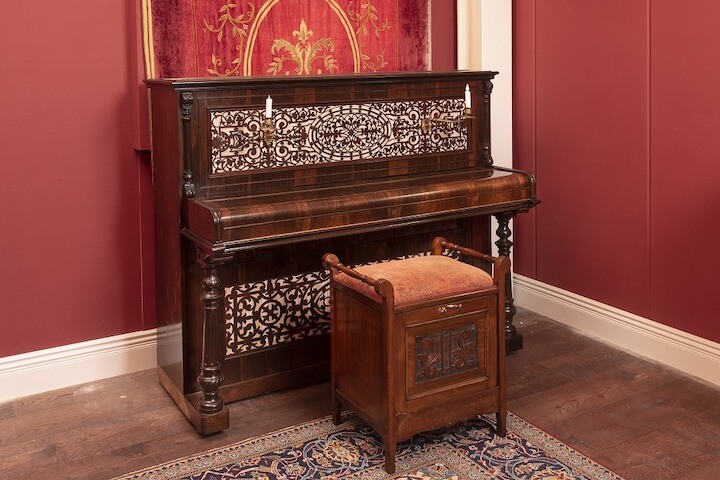
John Broadwood & Sons, holding the Royal Warrant, is one of Britain’s finest piano manufacturers. Originating from a harpsichord workshop in 1728, the company produced pianos for over 200 years from 1774 onward. Legendary composers such as Beethoven, Liszt, and Chopin played Broadwood pianos. These instruments, crafted from luxurious woods like rosewood, mahogany, and walnut, are masterpieces of exquisite detail.
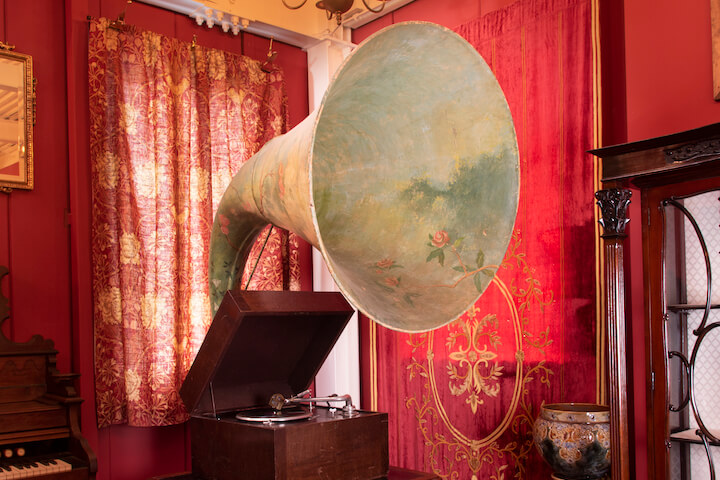
The star of the BAM collection, this massive gramophone, was purchased by the director on the TV Tokyo show “Kaiun! Nantomo Kanteidan” in 2021. Its enormous horn has an opening diameter of 93 cm. Officially named the “Expert Senior with All-Range Horn,” it was made in England in 1935.
The Expert company, founded in 1930 in London by Ellis Michael Ginn, specialized in handmade gramophones and is often called the “Rolls-Royce of gramophones.”
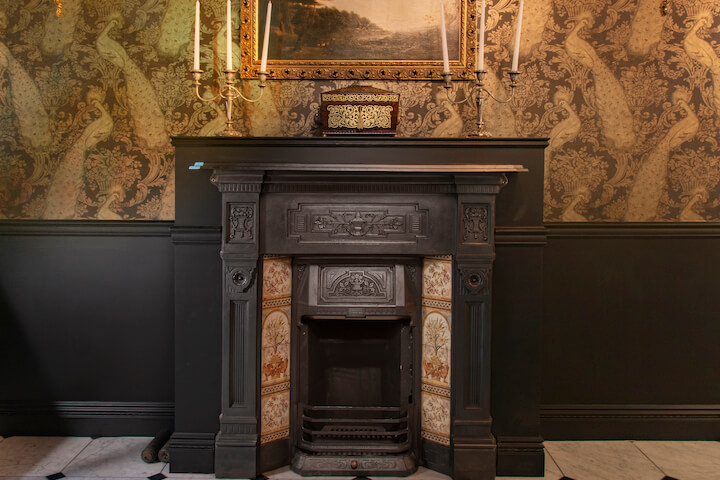
This large fireplace installed on BAM’s 4th floor features beautiful oak columns and panels from a Victorian residence in Kensington, London. The rich patina that has developed over time is truly a sight to behold.
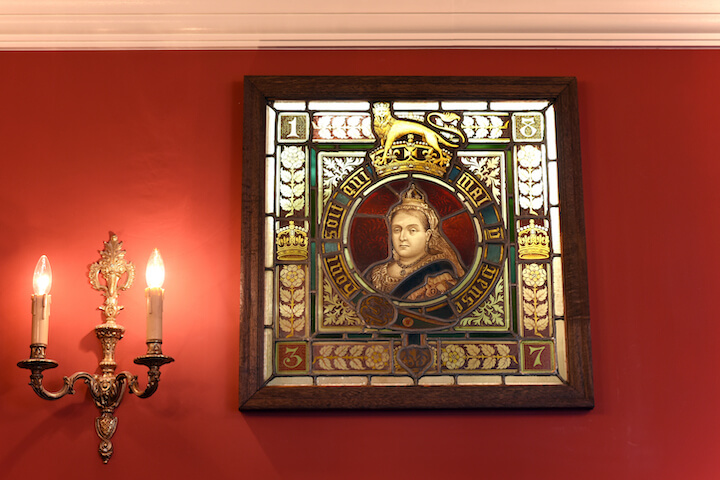
When Queen Victoria ascended the throne in 1837, Britain—propelled by the Industrial Revolution—entered its most prosperous era as the British Empire. At BAM’s 4th floor, stained glass panels featuring Queen Victoria, paired with those of Elizabeth I, are displayed as symbolic tributes to this grand period.
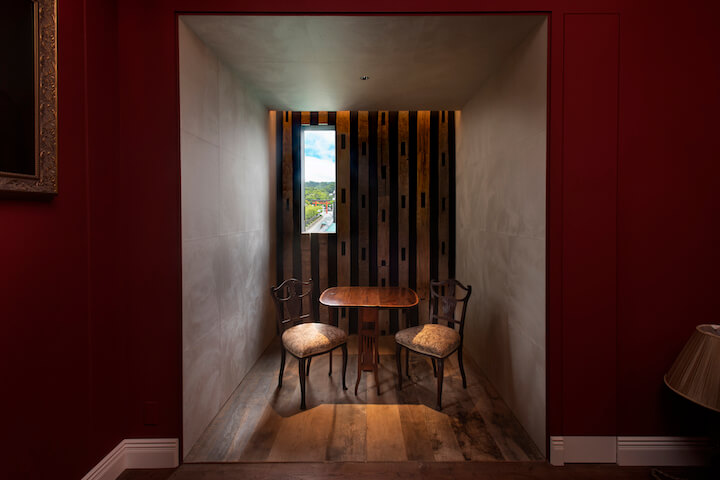
The main exhibit at the V&A Dundee in Scotland is a tearoom designed by Charles Rennie Mackintosh, an architect influenced by Japanese aesthetics. In contrast, a standing-style tea room conceptualized by Kengo Kuma—designer of the V&A Dundee—is displayed here. Its tables incorporate British antiques, symbolizing the fusion of Japan and the UK, as well as old and new.
Before the construction of BAM Kamakura, archaeological excavations revealed wooden beams believed to be from the Kamakura period. These foundational timbers were repurposed as wall decorations in the tea room. Soil excavated from the site was also mixed into washi paper for the wallpaper. The flooring uses oak boards originally installed in the historic Green Dragon Hotel, dating back to the Plantagenet dynasty (1154–1399). This aligns closely with Japan’s Kamakura period.
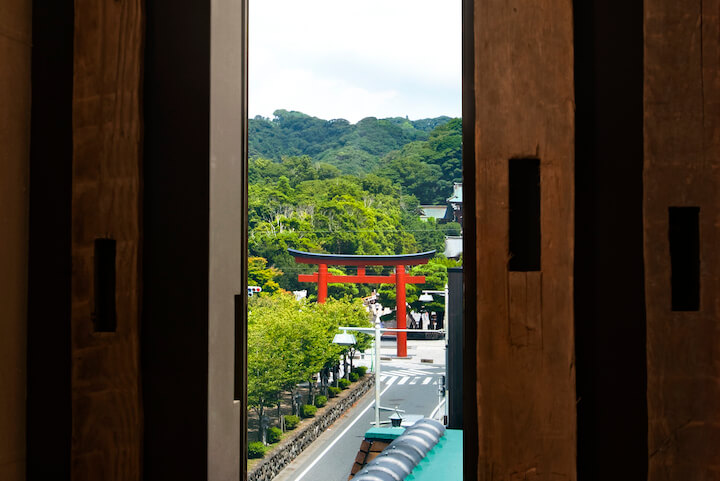
In the tearoom designed by Kengo Kuma, a window modeled after a traditional hanging scroll is installed facing Tsurugaoka Hachimangu Shrine. This acts as a “borrowed landscape,” offering a perpetual view of the shrine grounds and the vivid vermilion of the Third Torii gate. Visitors can also see Mount O-yatsu, the historically significant area preserved by Japan’s National Trust–inspired conservation movement. In this way, the window forms a symbolic connection between the United Kingdom and Kamakura.